Secular Relics
A search for traces along the Kamp
intro
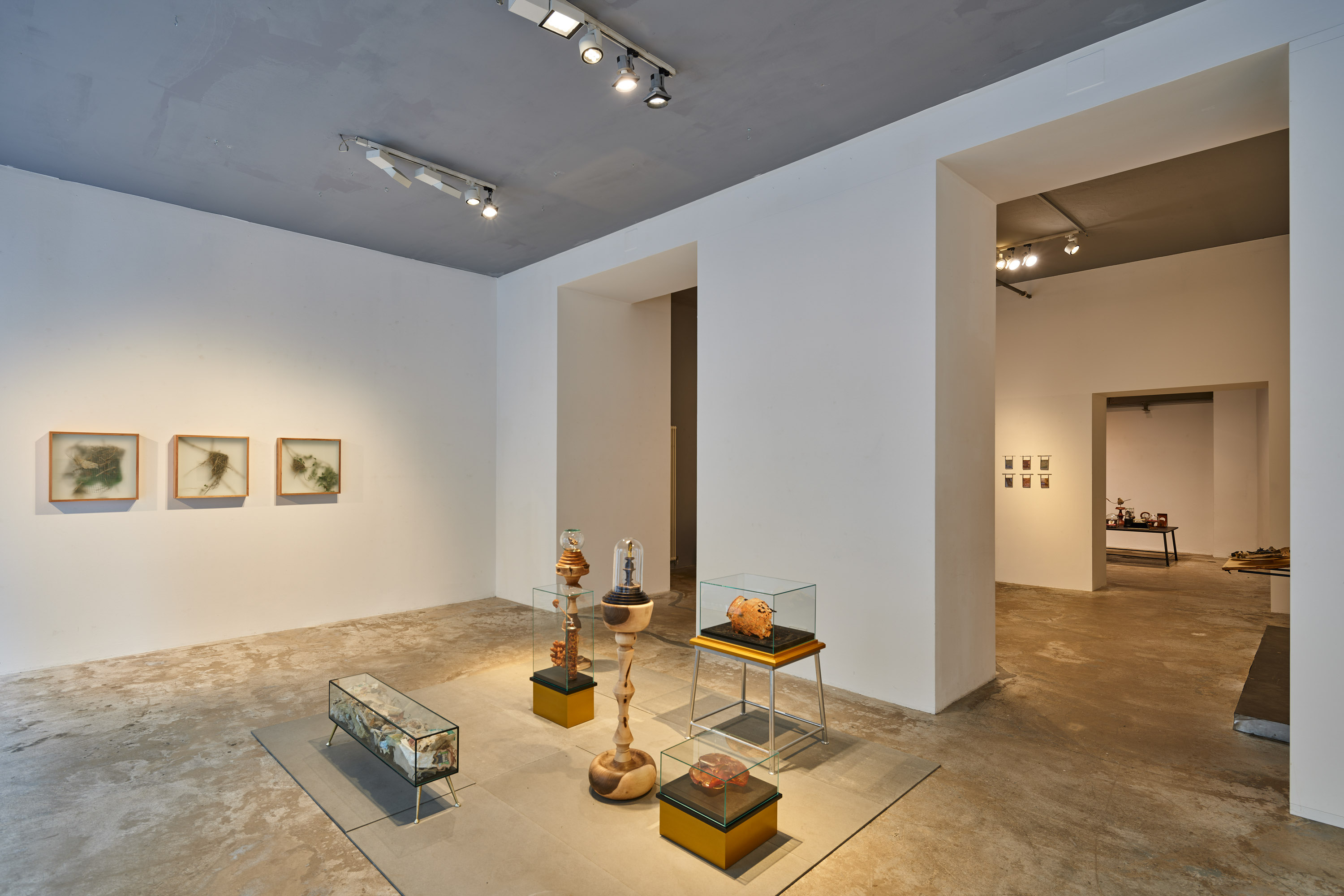
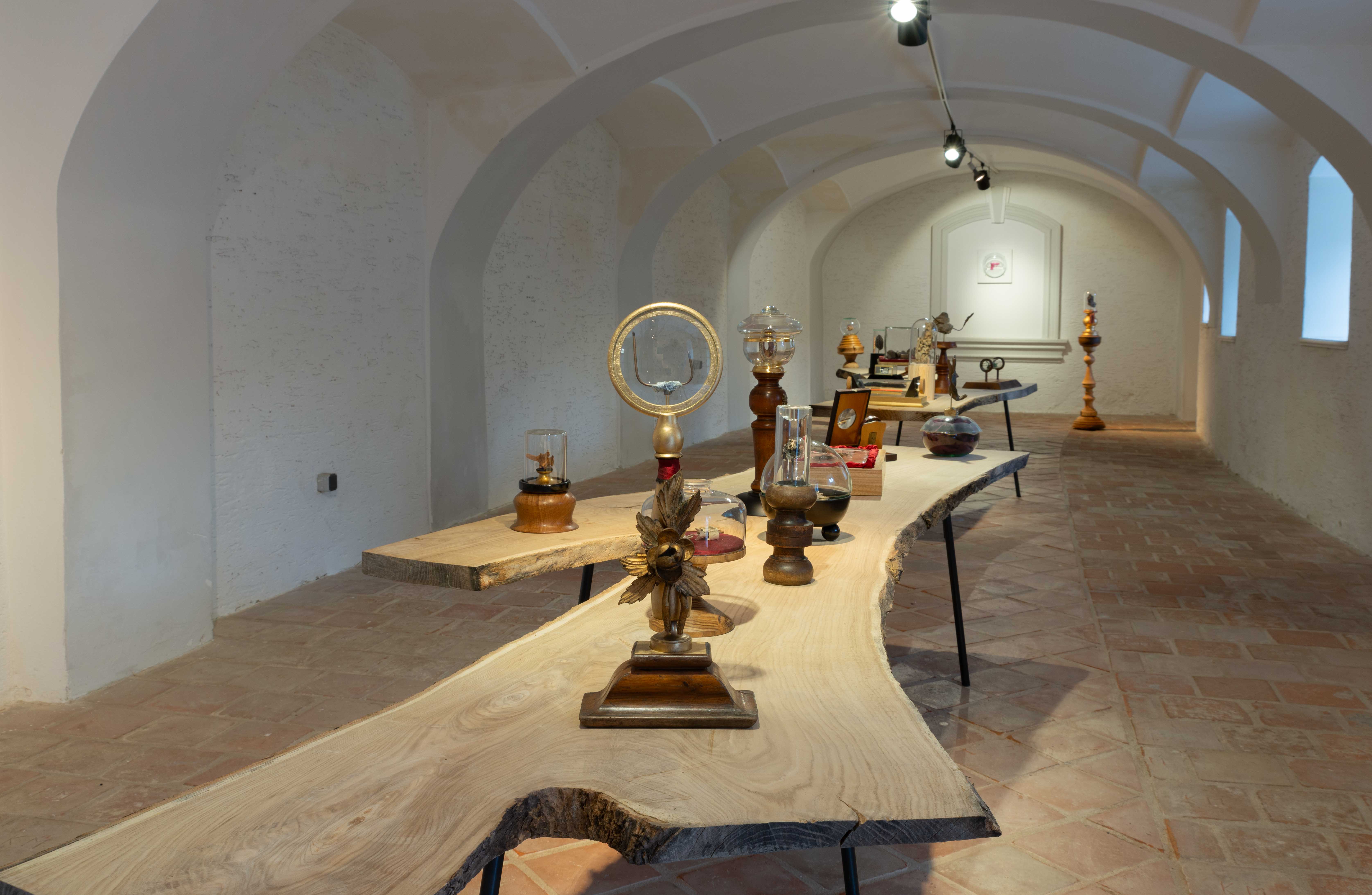
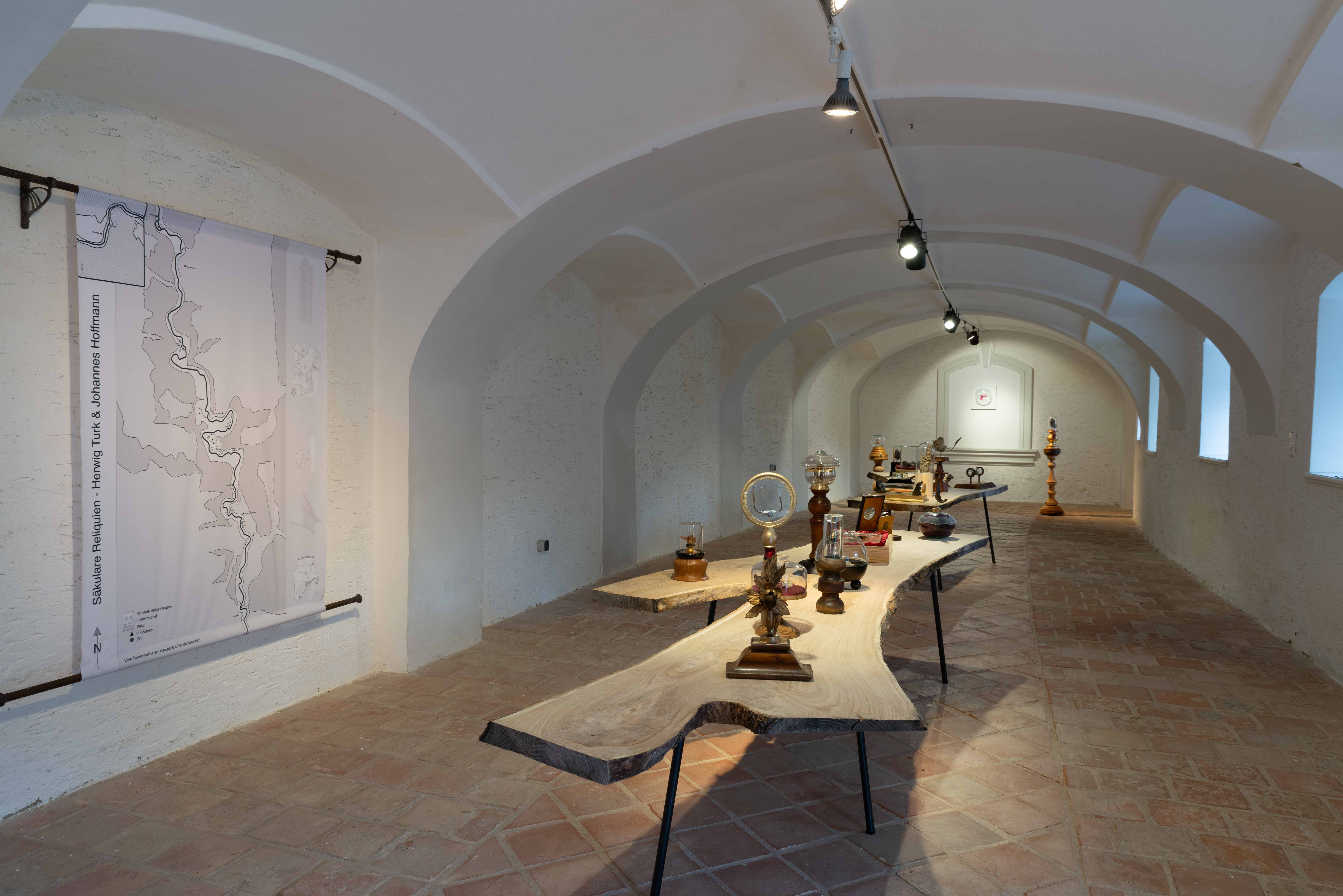
For the current project ‘Secular Relics: A Search for Traces along the Kamp’, Herwig Turk, together with Johannes Hoffmann, undertook several archaeological surveys of the Kamp between Steinegg and Zöbing during 2025. The focus of their interest was the flood debris that had accumulated during the floods of 2024, which served as both the inspiration and the raw material for the resulting artistic works.
The flood debris ‘tells’ a story not only of the valuable biological matter carried by the floodwaters but also of the waste and pollutants it has captured and dispersed. The flood debris thus manifests, in the long term, the residues of contemporary cultural practices that point to paradigms such as growth, consumption, prosperity, abundance and waste.
In this sense, these residues represent ‘secular relics’. They tell of the things we surround ourselves with, what we handle and consume, what is found in our homes and cellars, or what we use in workshops and production halls and subsequently dispose of. For the literal meaning of the Latin ‘reliquiae’ is ‘what remains’, ‘what has been left behind’; in a figurative sense, it also means ‘legacy’ – that which we leave behind.
exhibition1
exhibition 2
text
Secular Relics
A search for traces along the Kamp
Since 2017, Herwig Turk has been exploring river ecosystems through various collaborations with artists and experts: the Tagliamento, the Etsch/Adige, the Talfer/Talvera, the Eisack/Isarco, the Danube, the Kamp, the Mürz and the Isel. Exhibitions in Vienna, Linz, Bolzano and Gemona have presented various aspects of the respective ‘metabolism’ of the rivers and, above all, the disruptions to the exchange between the river and its surrounding landscape. As early as 2023, Herwig Turk and Gebhard Sengmüller presented their artistic and scientific investigations into the Danube in the area between Alberner Hafen and the Lobau oil terminal at the rauminhalt_harald bichler gallery under the title ‘Danube: Layer Change in the Interstitial Space’.
Herwig Turk’s artistic research focuses on the diverse, yet always numerous and antagonistic overlaps and intersections of politics, perception, memory and history in relation to the representation of these specific ecosystems. Against this backdrop, Turk explores fundamental questions regarding the alternative perceptibility and interpretability of landscape and the actors involved in its ‘construction’, with a view to catalysing necessary utopias for its future shaping.
For his current project ‘Secular Relics: A Search for Traces along the Kamp’, Herwig Turk undertook several archaeological surveys of the Kamp between Steinegg and Zöbing in collaboration with Johannes Hoffmann throughout 2025. The focus of their interest was the flood debris that had accumulated in the wake of the floods of 2024, which served as both the inspiration and the source material for the resulting artistic works. The flood debris ‘tells’ a story not only of the valuable biological matter carried by the floodwaters but also of the waste and pollutants it has captured and dispersed. The flood debris thus manifests, in the long term, the residues of contemporary cultural practices that point to paradigms such as growth, consumption, prosperity, abundance and waste. In this sense, these residues represent ‘secular relics’. They tell of the things we surround ourselves with, what we handle and consume, what is found in our homes and cellars, or what we use in workshops and production halls and subsequently dispose of. For the literal meaning of the Latin ‘reliquiae’ is ‘left over’, ‘left behind’; in a figurative sense, it also means ‘legacy’ – that which we leave behind.
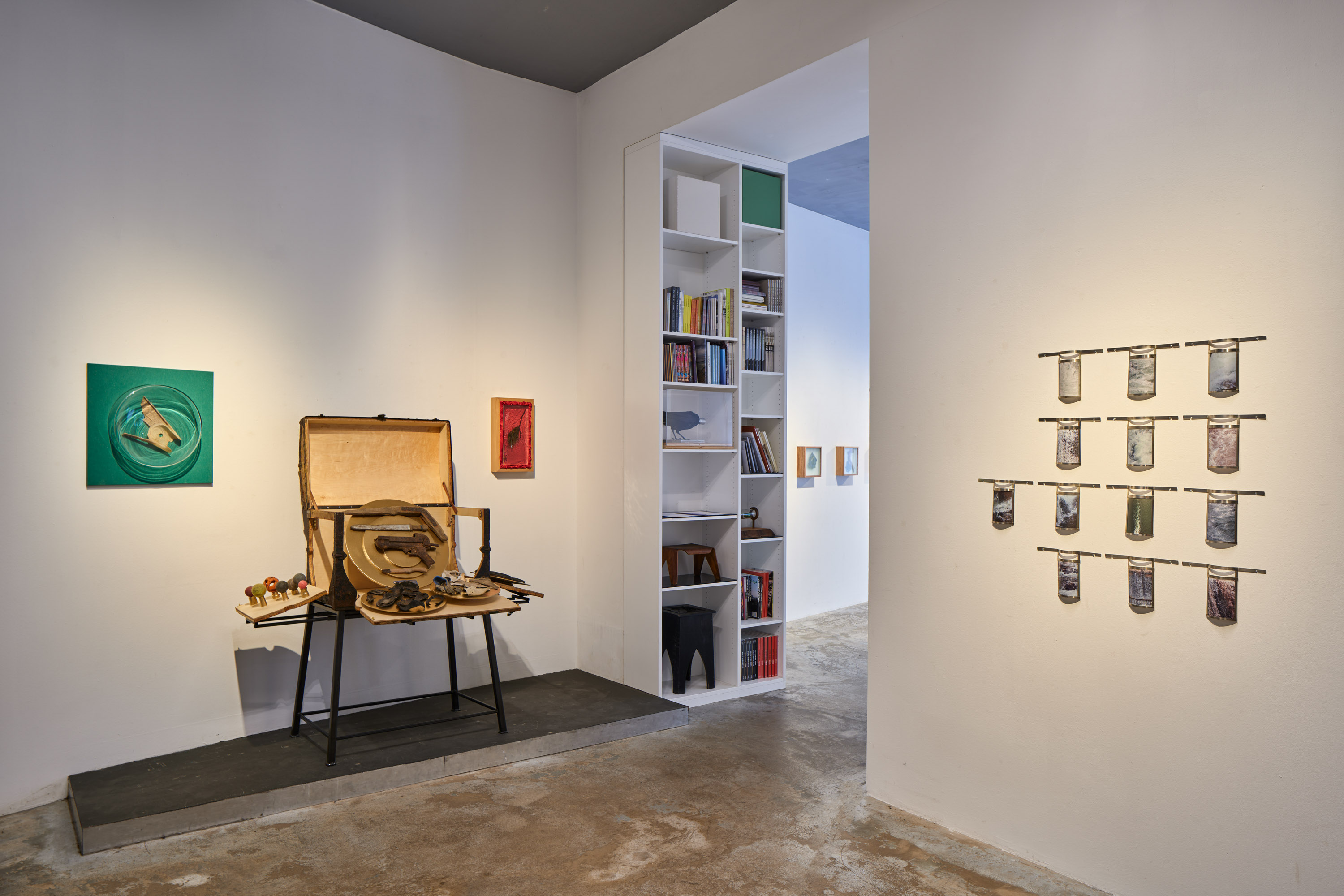
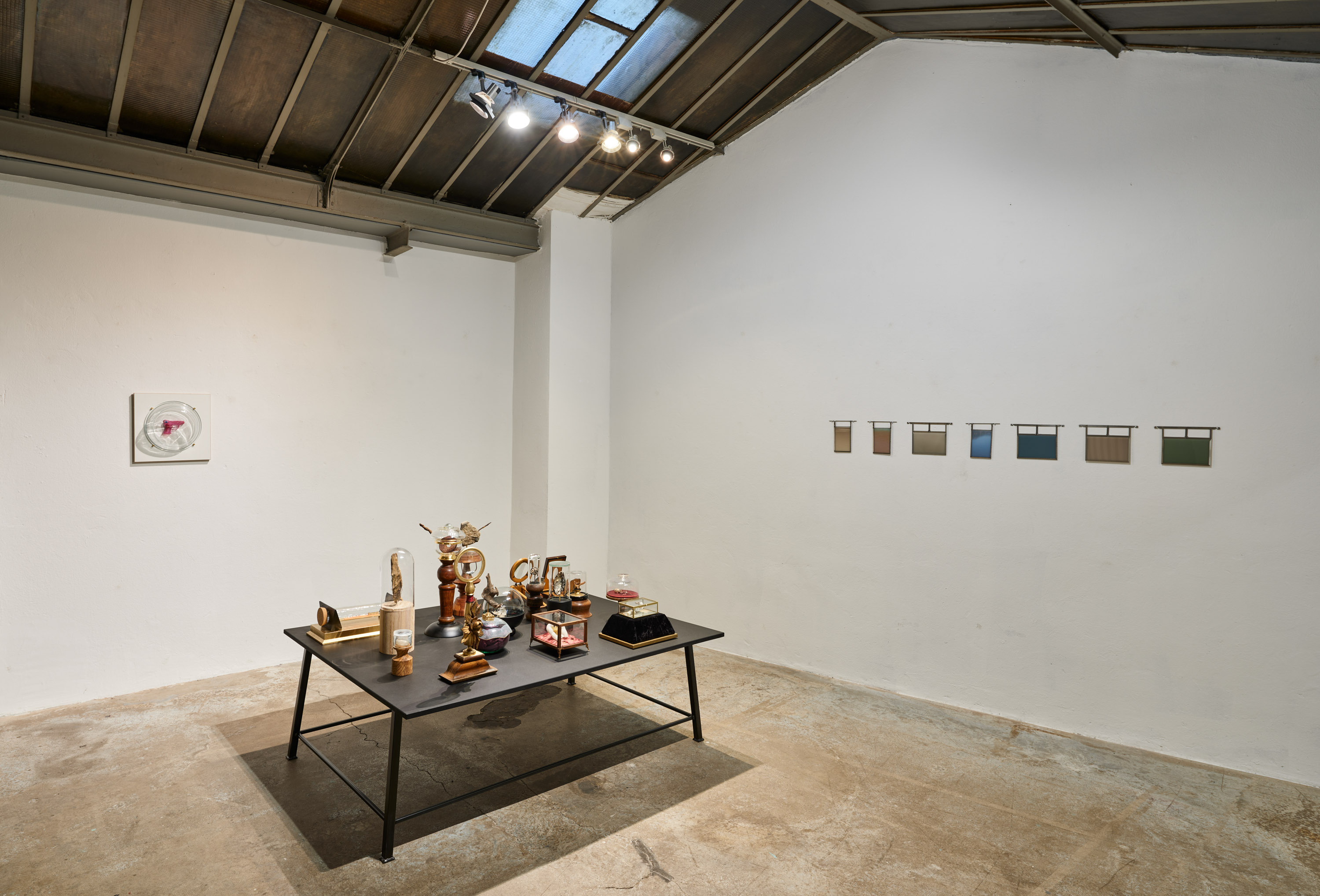
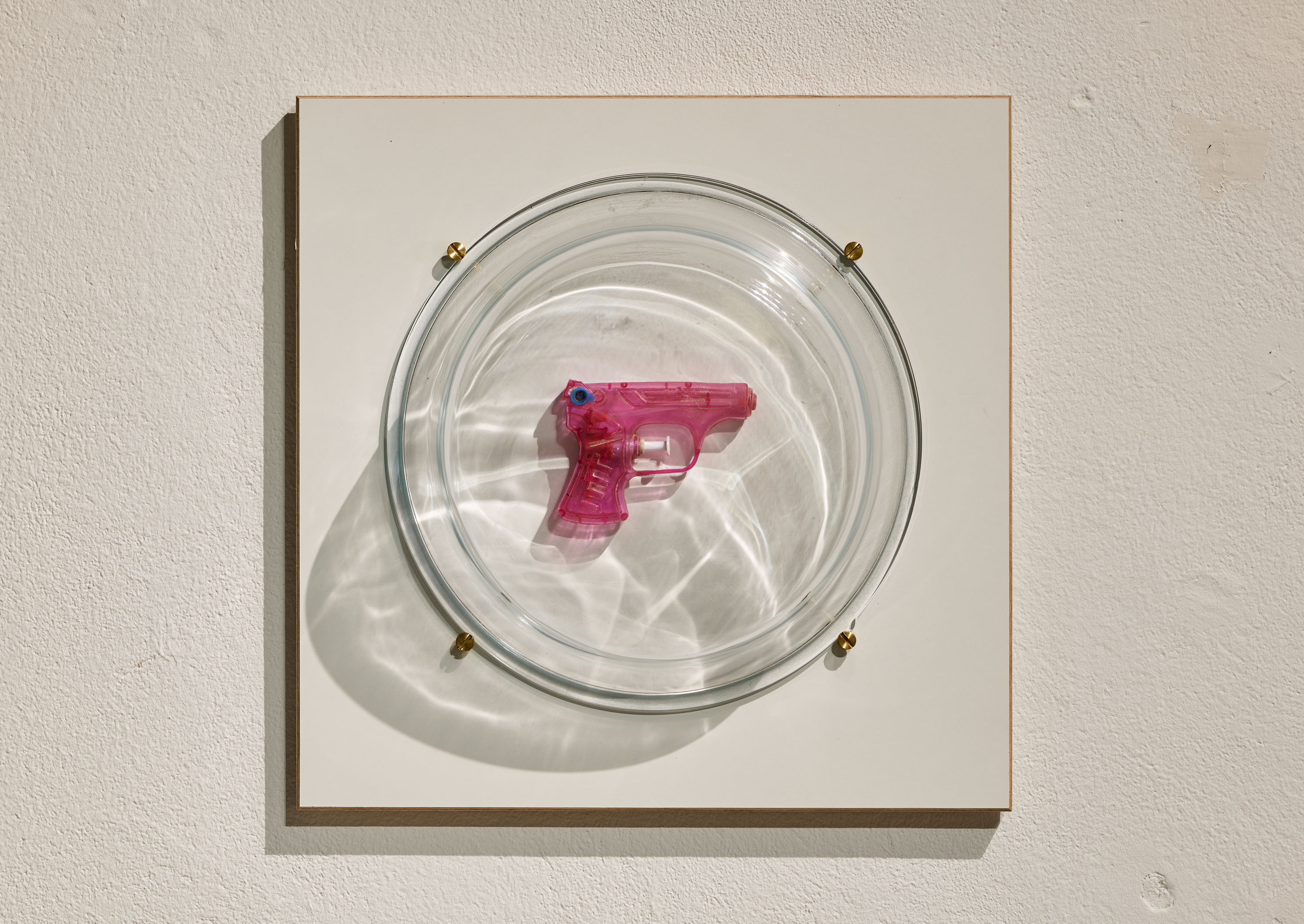
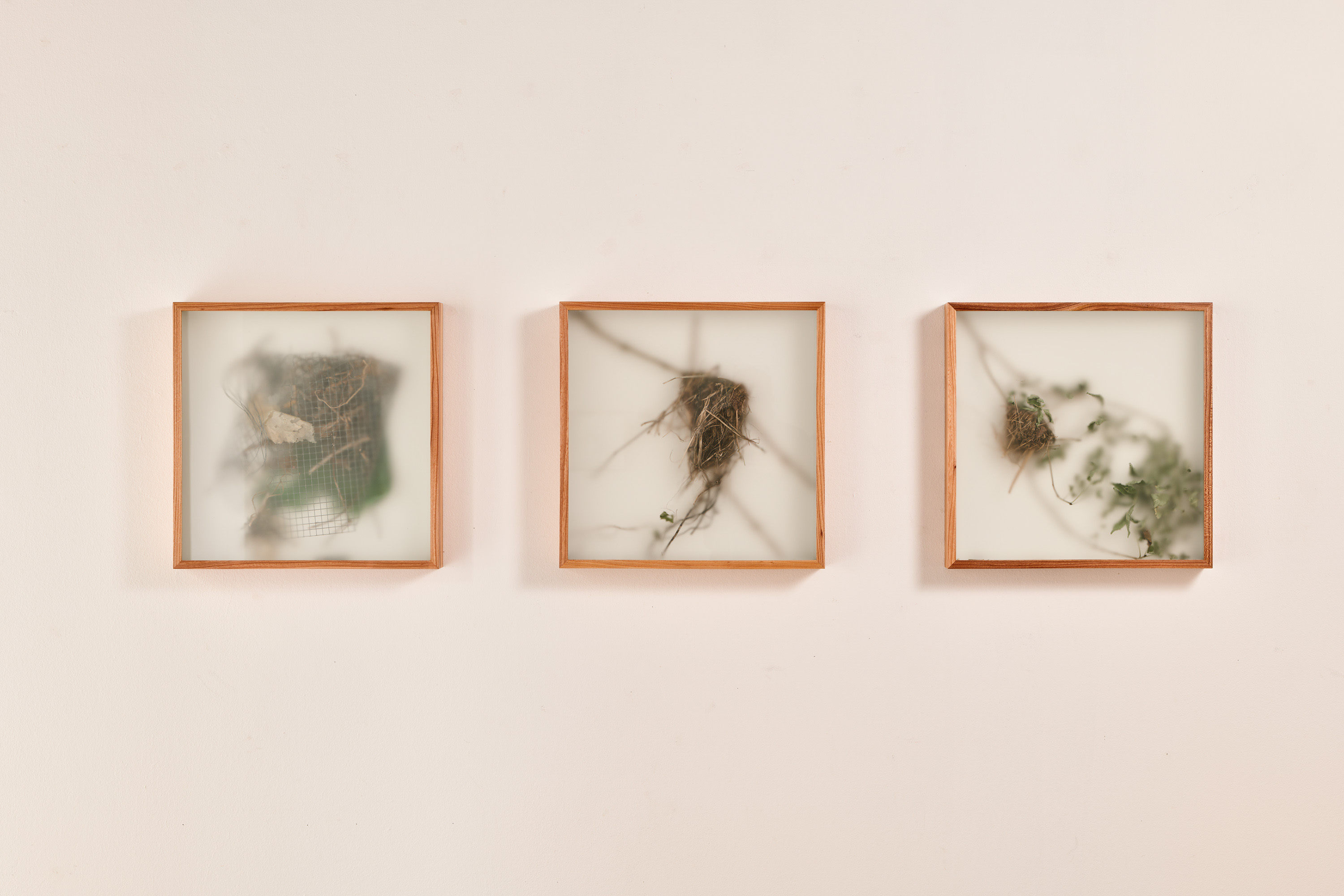
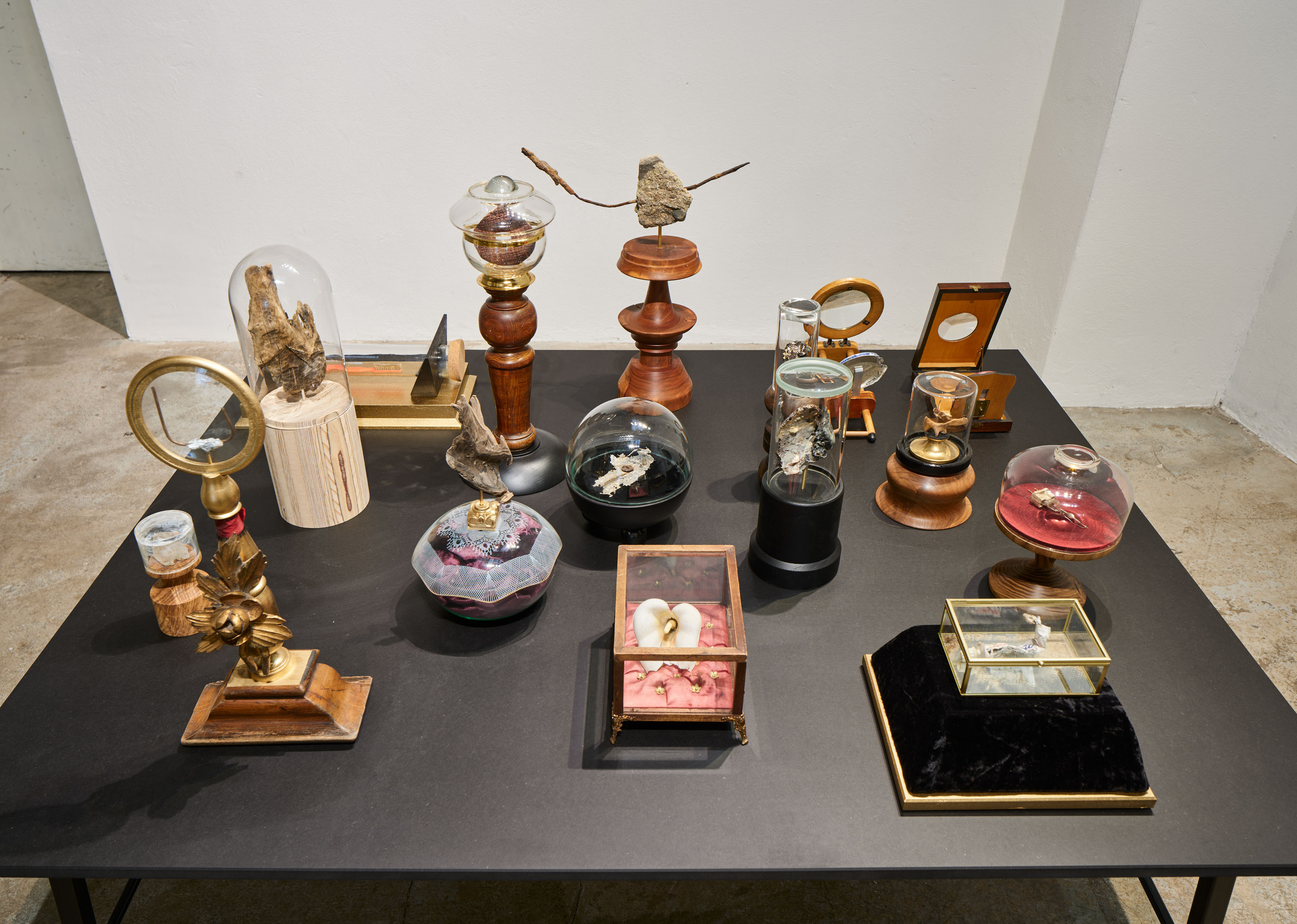
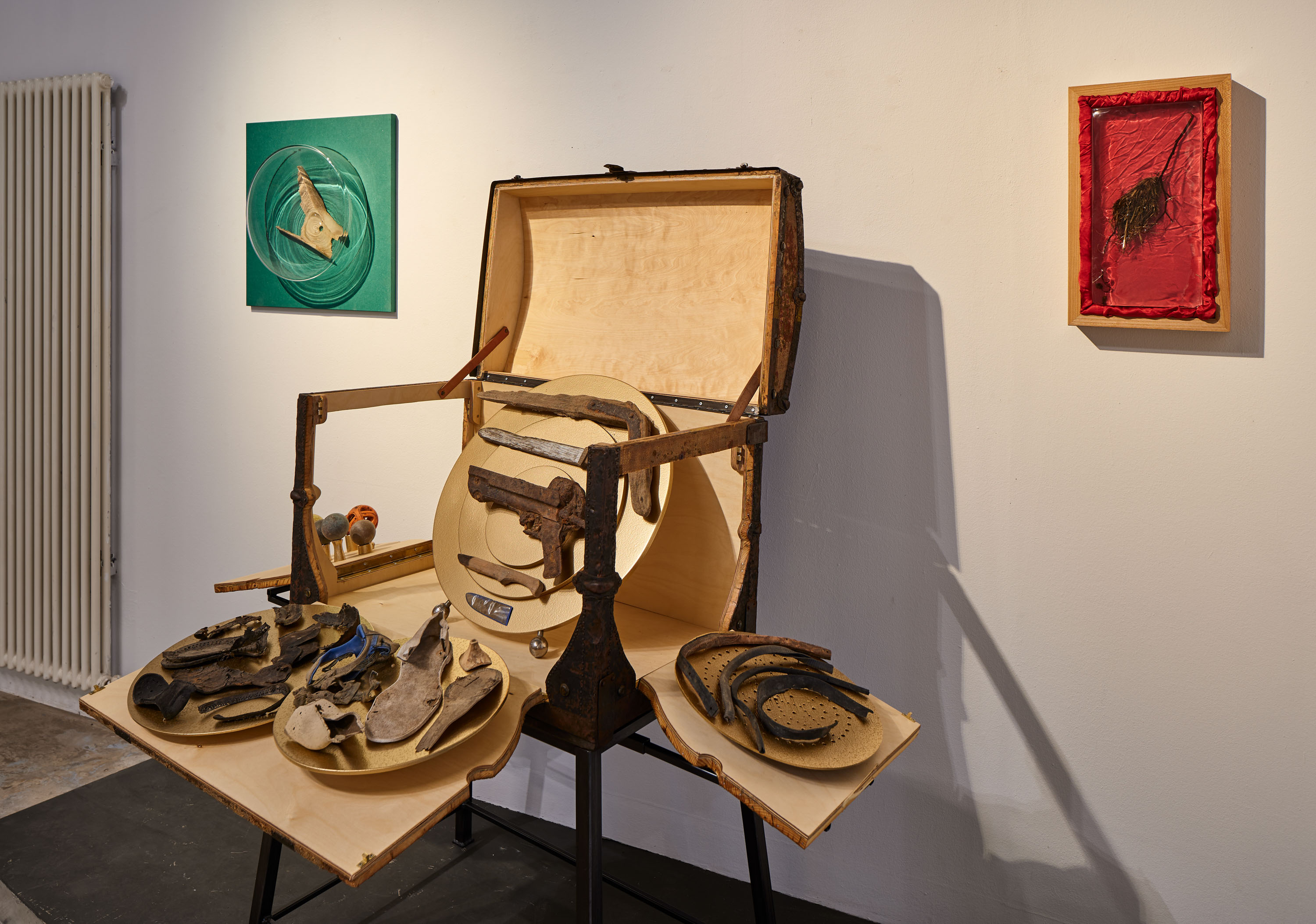
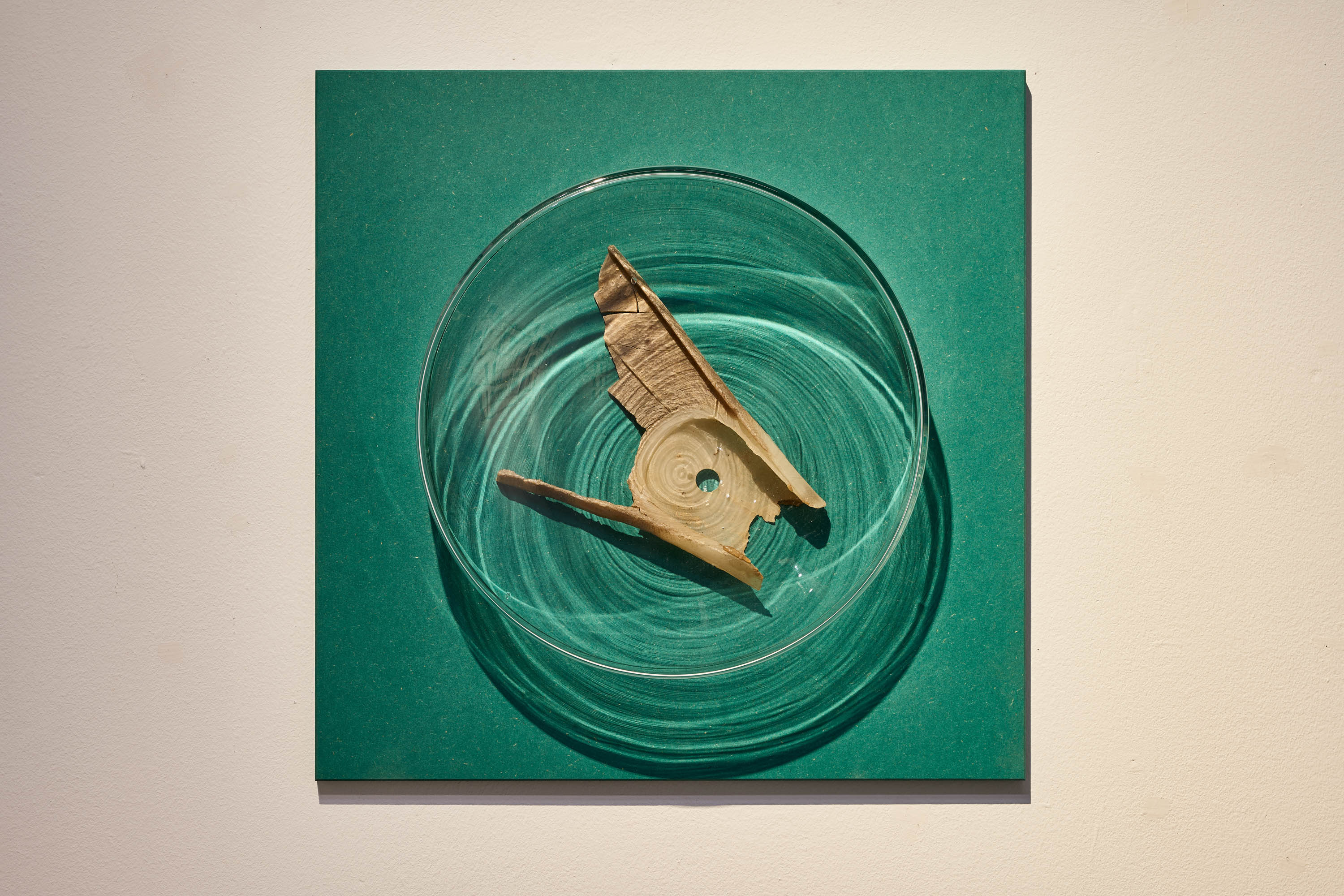
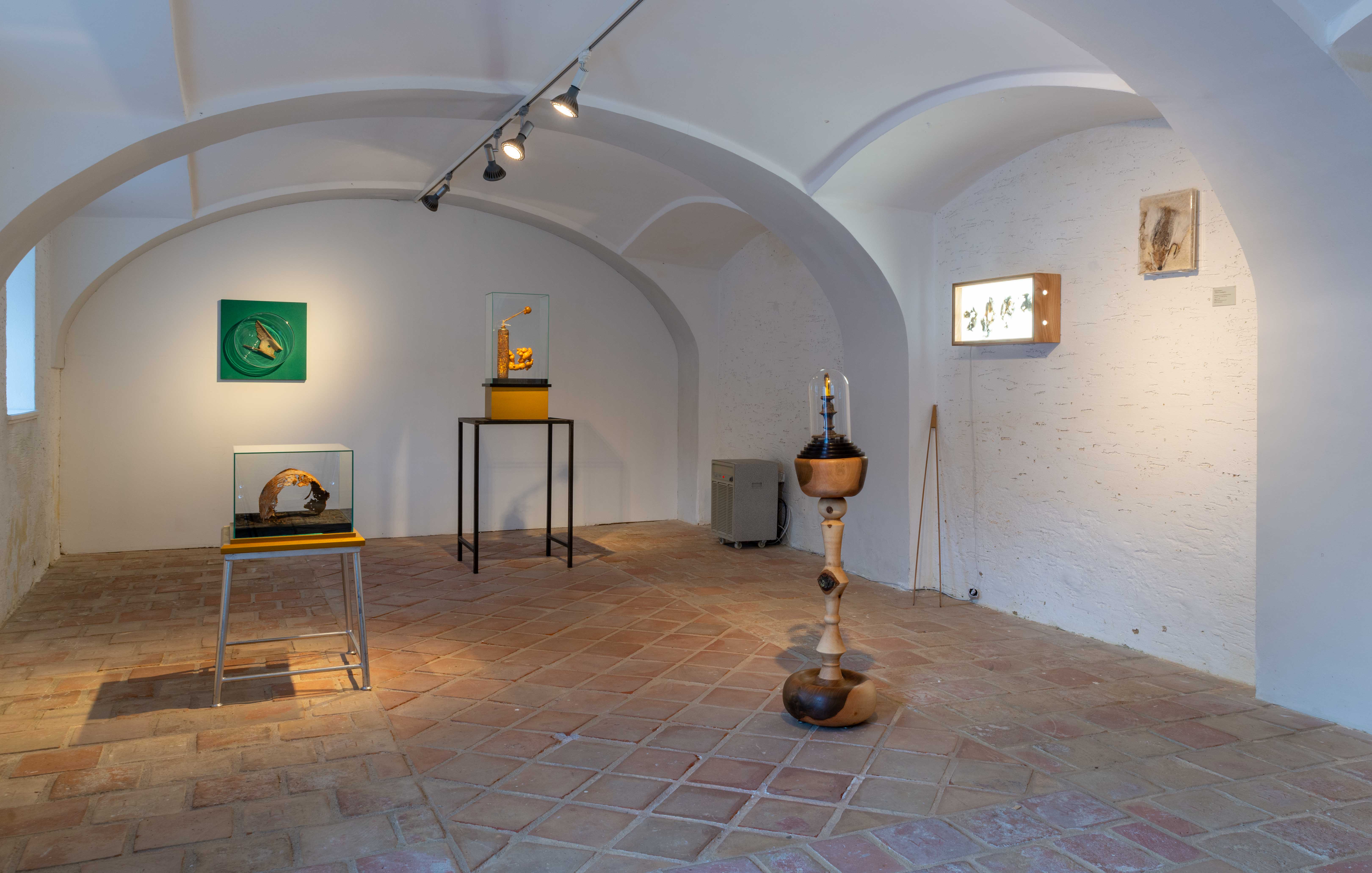
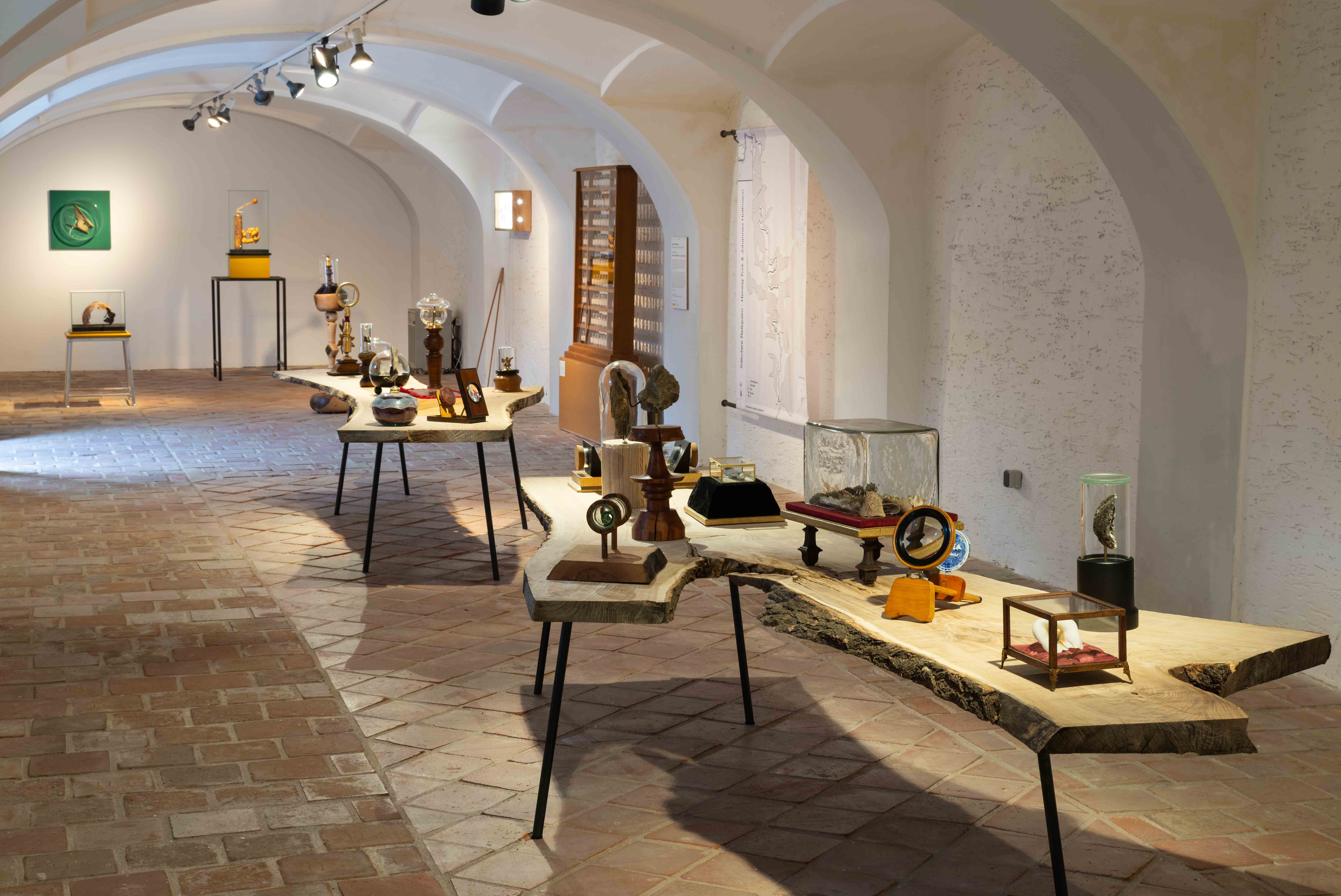
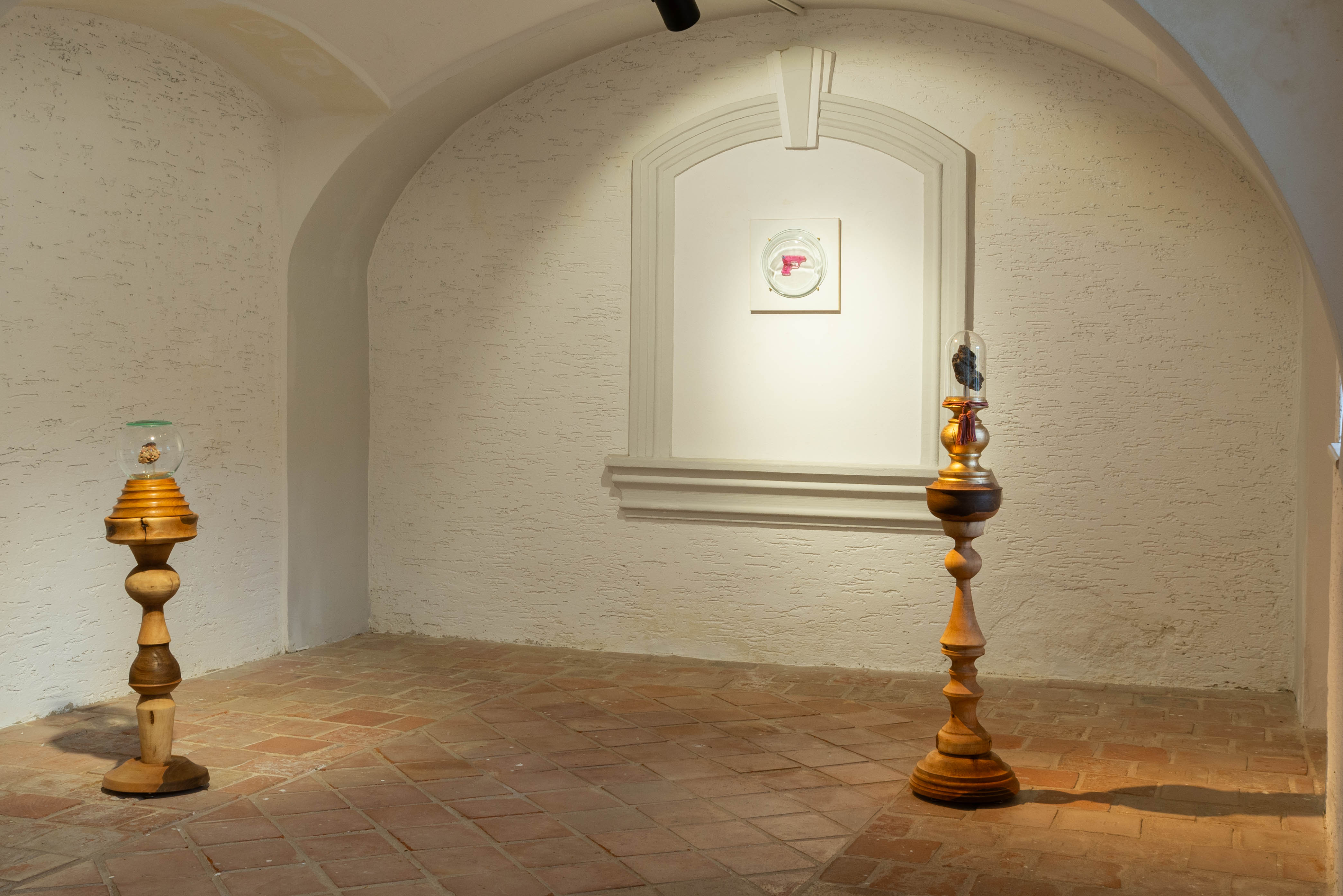
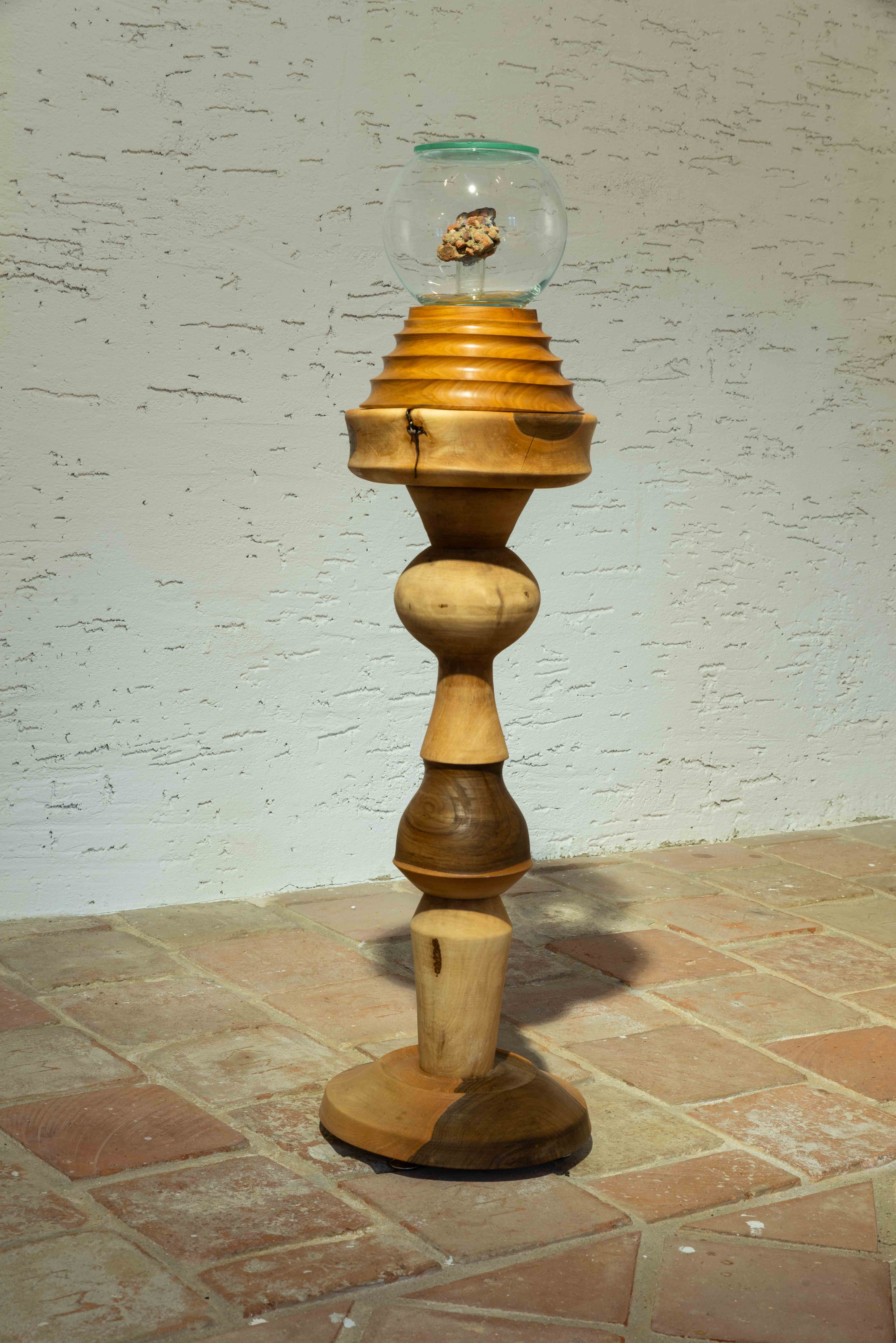
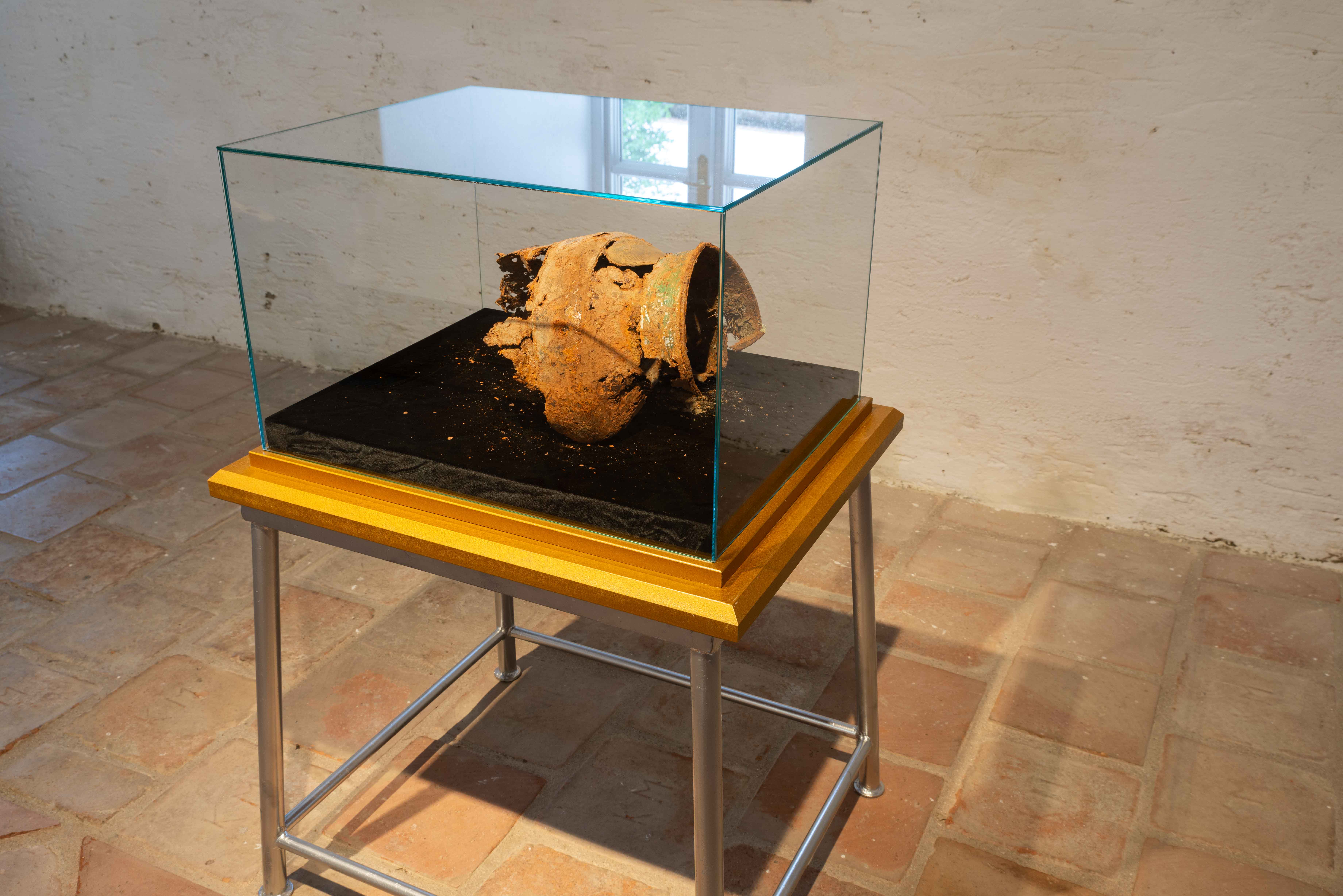
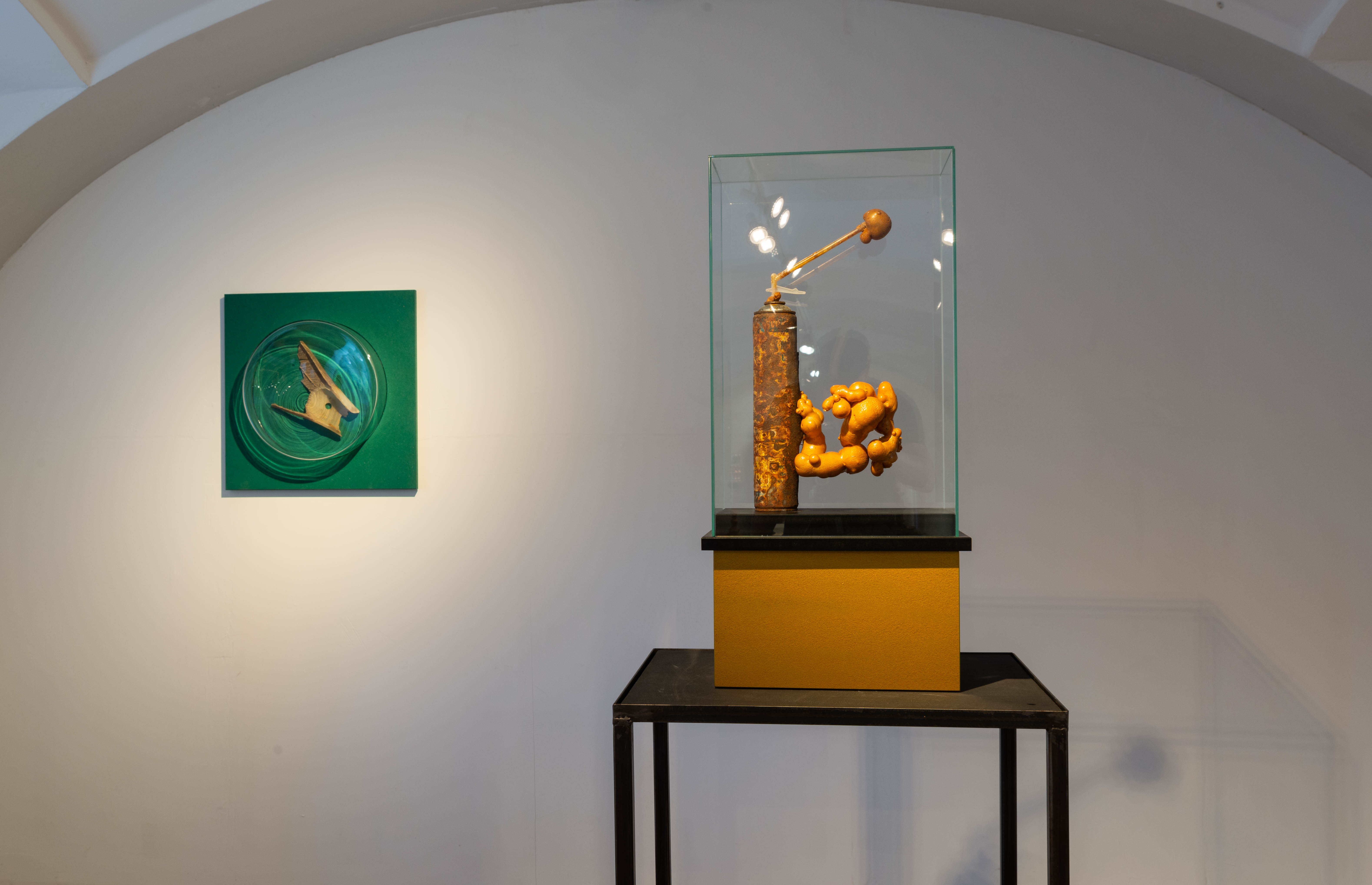
Drawing on religious forms of representation, as well as on cabinets of curiosities, natural history museums and even strategies from conceptual art and Nouveau Réalisme, the artists created elaborately designed glass containers – some fitted with optical lenses – along with bases turned from maritime pine or walnut and cherry wood hangers, in order to present largely mundane objects that had their original ‘exhibition space’ at home – perhaps in the fridge, a display cabinet, the garage or a workshop.
The religious connotation of the term ‘relic’ stems from a surprising analogy between religion and capitalism: everything they touch, they transform into something else. Through faith, sinners become the saved; natural ecosystems and biodiversity become an infinite resource that, through the most diverse forms of contact and transformation, is turned into something else: raw materials, consumer goods, infrastructure, money, shares – in other words, wealth. In both cases, one could speak of a long chain of miracles that have transformed both people and the course of history. And both – belief in the sacred and belief in progress and consumption – do not produce their history without leaving a legacy.
Yet what remains as a legacy is either displayed and venerated, or thrown away, buried and disposed of. These differing strategies point to different politics of representation: in one case, the staged presence of the relic offers us a kind of participation in spiritual eternity and salvation; in the other, its – unwanted – presence brings into focus the flip side of our appropriation and the ongoing consumption of our world – the ‘age of the burning of the world’, as Achille Mbembe calls it.
What colour does the lack of oxygen in a body of water produce? In a second series of small-format photographs in special frames, which were originally used for film development, Herwig Turk shows sections of various water surfaces. Here, perception and documentary strategies reach their limits and come into conflict with stereotypical notions of the beauty and pristine nature of the natural world. For the colour of the surface depends on the temperature of the water, its flow rate, the suspended matter it carries, its nitrate and oxygen content, and also on the prevailing weather conditions and the position of the sun. So perhaps the flowing waters beneath these sometimes seductively shimmering water surfaces, and the eddies that ripple around the stones and plants, are also characterised by significant disturbances and contain numerous ‘secular relics’, such as microplastic particles? We simply cannot see them with the naked eye, which is why they are not part of our perception of the landscape.
Through his artistic research, Herwig Turk draws us into numerous fields of contemporary analysis of landscapes and the networks formed by these landscapes, upon which they are simultaneously based. One insight arising from this research is undoubtedly the conviction that we can no longer pretend that our present-day societies can be viewed in isolation from their exploitative and extractivist foundations. Traces of this foundation can be found everywhere today, including in the waters to which the small-format photographs bear witness with their seemingly innocent colours.
Reinhard Braun 2025